

If you hold a residence permit in Saudi Arabia, the UAE, or any other Gulf state, that permit does not take the place of a visa. Travelers who are not GCC nationals still need a Bahrain visa, and the option open to them is a two-week single-entry eVisa that costs 10 BHD total and is issued within one working day via https://www.evisa.gov.bh/.
Below, GCC residents will find the full process laid out: which papers to collect, what the fees come to, and how to submit the application from outside the country. Our site is an independent travel-information outlet rather than a government service. We neither process applications nor collect payments, and because regulations do change, always verify the current terms on the official portal before booking.
Is a Bahrain visa required for GCC residents?
Your passport, not your address, is what settles who needs a visa for Bahrain. Citizens of the GCC, whether Saudi, Emirati, Kuwaiti, or from neighbouring states, may enter Bahrain using only their national ID cards. Expatriates who live in GCC countries are not given that same shortcut.
Bahrain’s Aliens (Immigration and Residence) Act 1965 provides that an immigration officer may admit a foreigner only when they arrive with a valid passport carrying a valid visa, unless the Director of Immigration exempts that category. All other travelers fall under rules based on nationality. The NPRA names 209 countries and territories that may apply online, adding the note that “terms and conditions apply,” which means the passport you hold decides the route you take.
Specifically for GCC residents, the NPRA makes available a two-week single-entry electronic visa that is applied for from outside Bahrain. That same Bahrain visa GCC residents procedure serves people residing in Saudi Arabia, the UAE, and the remaining Gulf states.
Documents You’ll Need to Apply
For GCC residents there is one additional document that matters most: a copy of your residence permit with a valid return visa valid for at least 3 months, as outlined in the Bahrain entry requirements. That requirement is what sets your application apart from one filed by an ordinary visitor.
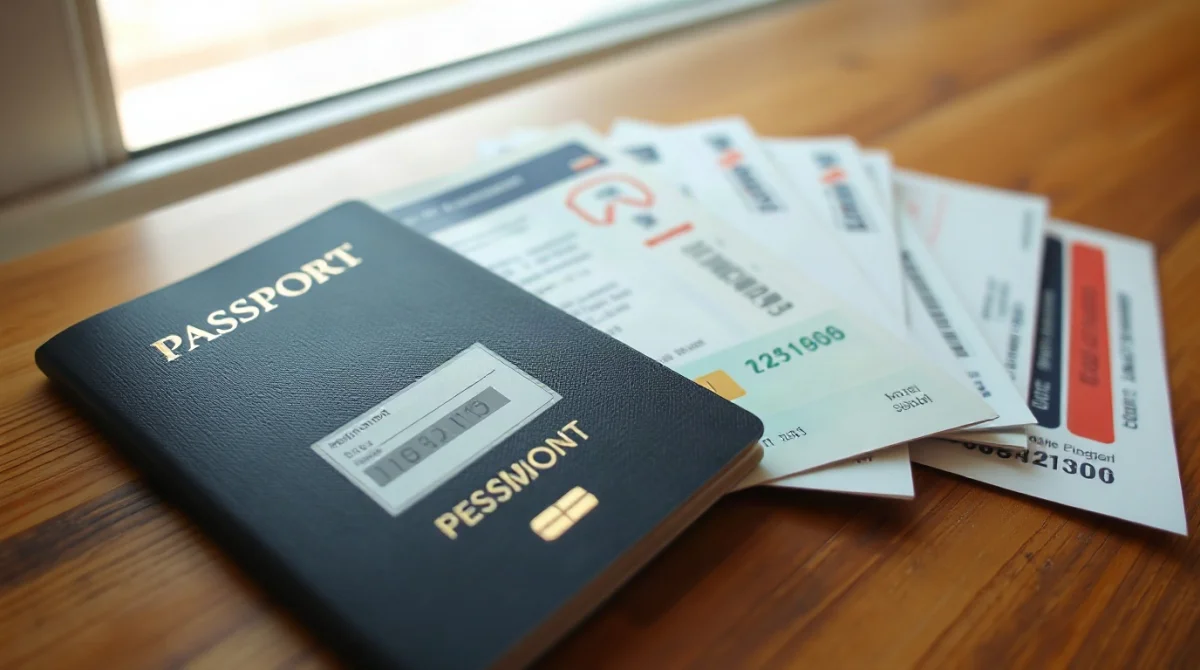
In addition to that, have the following ready:
- A copy of the passport, which must be valid for more than 6 months.
- Either a legible copy of your hotel booking or evidence of a residential address in Bahrain.
- Evidence of a return air ticket.
- A bank statement covering the last 3 months that shows a regular income of at least $1,000.
One condition often takes people by surprise: you have to be outside Bahrain at the moment you submit. File it from Saudi Arabia, the UAE, or wherever it is you live.
Fees and Processing Time
When you apply for a Bahrain visa GCC residents, two charges apply, as detailed in the breakdown of Bahrain visa fees: a 5 BHD application fee plus a 5 BHD visa issuance fee, which together come to 10 BHD total. The breakdown looks like this:
| Item | Amount | Notes |
|---|---|---|
| Application fee | 5 BHD | Non-refundable |
| Visa issuance fee | 5 BHD | Second part of the 10 BHD total |
| Processing time | 1 working day | Applies to the two-week single-entry eVisa |
| Validity after issuance | 3 months | Invalid if not used within 3 months of issuance |
| Extension | 25 BHD | Adds 14 days |
Those figures come from the NPRA eVisa service page. An equivalent Bahrain visa on arrival costs BD 5.000, yet as a GCC resident you apply online from outside Bahrain rather than at the border.
Two caveats worth stating plainly: paying the fee does not guarantee approval, and should your application not be approved, nothing is refunded. Likewise, if you are refused entry at the border, no part of the fee comes back.
How to Apply Online, Step by Step
Everything runs through a single portal. The step-by-step Bahrain eVisa application process is as follows:

Check that you are outside Bahrain
At the time you submit the application, you must be outside Bahrain.
Visit the eVisa portal and verify your eligibility
Go to https://www.evisa.gov.bh/ and confirm that you qualify.
Fill in your details and attach the documents
Upload your residence permit, passport, proof of accommodation, return ticket, and bank statement.
Explain why you are visiting
State the purpose of your trip to Bahrain.
Pay the fees and retain your receipt
Pay the 10 BHD total and keep your receipt.
Track the status of your application
If needed, follow your application status through the portal.
One caution to keep in mind: no website or company acts on behalf of the Government of Bahrain, so be wary of third parties claiming to help. Nor does holding the visa guarantee that you will be let in, since every condition must be met on arrival. Any questions? Write to [email protected].
Frequently Asked Questions (FAQ)
I live in Saudi Arabia or the UAE – can I get a visa on arrival in Bahrain?
If you are a GCC resident, the two-week single-entry electronic visa has to be applied for from outside Bahrain rather than at the border. Among the papers you submit is a copy of your residence permit together with a valid return visa that stays valid for at least 3 months. Whether you could otherwise obtain a visa on arrival depends on the nationality in your passport.
How much time does it take to process the Bahrain visa for GCC residents?
A single working day. The NPRA issues the two-week single-entry eVisa within one working day, and the application must be submitted while you are outside Bahrain. Use the NPRA eVisa portal at evisa.gov.bh to apply.
For what period am I allowed to stay in Bahrain with an eVisa?
Two weeks. A stay of 2 weeks is permitted on the visit visa, and it is single entry only. Should you need longer, an extension can be arranged at the NPRA office or online for a fee of 25 BHD, which covers 14 extra days.
After I arrive, is it possible to extend my Bahrain eVisa?
Yes, provided an extension applies to your case. The request is made at the Nationality, Passports and Residence Affairs office or online, and costs 25 BHD for 14 additional days. Take along a copy of your passport that is valid for more than 6 months.
What occurs if my application does not get approved?
No refund of the processing fee is given. The NPRA is explicit that paying the application fee does not guarantee approval, and that nothing is returned when an application is rejected or entry is refused at the border.
Is entry guaranteed by having a Bahrain eVisa?
No. According to the NPRA, possessing a visa does not guarantee entry into Bahrain; to be admitted you have to satisfy every condition on arrival. When entry is denied, none of the fee is refunded.
As a GCC resident, where should I submit an application for a Bahrain eVisa?
Through the NPRA eVisa portal at https://www.evisa.gov.bh/. That is the sole government website for Bahrain visa applications, and submissions must be made while you are outside the Kingdom.
Once issued, for how long is the Bahrain eVisa valid?
Three months. Should you fail to use the visa within three months of its issuance, it becomes invalid, so schedule your application around your actual travel dates instead of applying well in advance.
Sources
- Bahrain eVisa (NPRA) – government visa portal – lists of eligible countries, the application process, and the disclaimer (verified 2026-09-26)
- NPRA – Conditions for Visit Visa, 2 Weeks Single Entry (online) – the fee and the terms of stay (verified 2026-10-10)
- NPRA – Conditions for Visit Visa, 2 Weeks Single Entry (on arrival) – comparison of the fee charged on arrival (verified 2026-10-10)
- NPRA – Countries Eligible to Get Visa Online – the list of eligible countries along with the conditions (verified 2026-10-10)
- Legislation and Legal Opinion Commission – Aliens (Immigration and Residence) Act 1965 – the legal basis behind the visa requirements (verified 2026-10-12)
- NPRA – Two Weeks Single Entry Electronic Visa – the documents required, the fees, and the processing time (verified 2026-10-08)
Dane zebrane na podstawie: TravelRequirements.info – Entry Requirements Dataset, AXG Sp. z o.o., https://travelrequirements.info/data/ (CC BY 4.0)
About this guide
Our editorial team, working for an independent travel-information site, put this guide together. All facts presented here are drawn from the government pages linked above, and none of the figures are estimates of our own. Those sources were last reviewed by us on 2026-10-12. Because visa rules do change, check the NPRA portal before you travel.