
If you plan to apply for an eVisa, your passport needs to stay valid for longer than six months. Travelers who instead take the visa-on-arrival route must hold a passport covering their stay or the visa period, whichever of the two is longer. A confirmed return ticket is required as well. eVisa applicants also have to submit a bank statement for the previous three months that shows a regular income of at least $1,000. Nationals of GCC countries may cross the border with nothing more than their national ID card.
What you are reading is an independent guide, not a government website, put together for travelers working out their Bahrain entry requirements. We neither charge fees nor file applications on your behalf. Applications go through the government’s eVisa portal at https://www.evisa.gov.bh, which is also the place to verify the terms in force before you fly. To check eligibility for your own nationality, take a look at our Bahrain Visa Guide and Who Needs a Visa pages.
Bahrain Entry Requirements: What to Bring
Bahrain’s Aliens (Immigration and Residence) Act 1965 provides that an immigration officer may refuse to let a foreigner land unless that person carries a valid passport or another recognized travel document with a valid visa attached, though the Director of Immigration may designate categories that are exempt. The same statute requires anyone landing to produce a valid passport and a completed landing or embarkation card whenever asked.
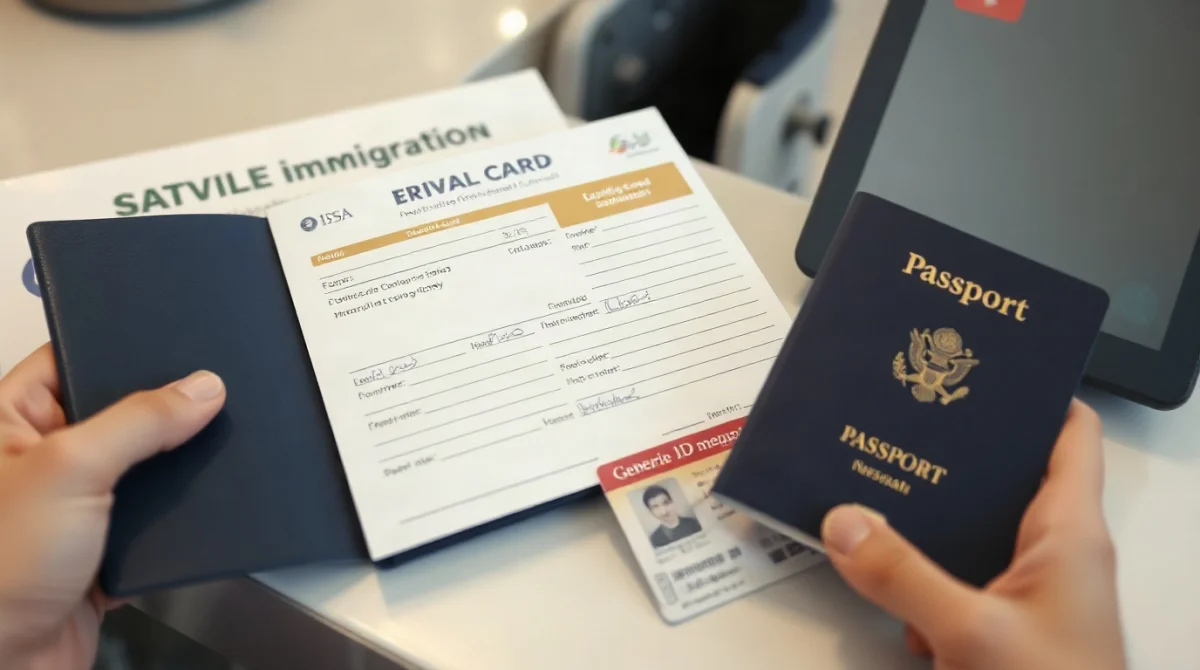
Citizens of the GCC states have a simpler time of it: Bahrain’s national portal confirms that a national ID card alone is enough for them to enter. Everybody else needs a visa, which can be obtained online in advance, from a Bahraini embassy in advance, or on arrival, as the UK Foreign Office explains.
Two routes cover most travelers. With the eVisa, you apply and pay online while still outside Bahrain. At any point of entry, a 2-week single-entry visa on arrival is granted. Both ask for broadly the same supporting documents, which we go through below.
Passport Validity Rules for Bahrain
Which rule applies to you depends on how you obtain your visa. When applying for the eVisa, the NPRA requires a copy of a passport that is valid for over six months. When it comes to the visa on arrival, the conditions page on the eVisa portal states that your passport must remain valid for the length of your stay or of the visa, whichever is longer.
The six-month benchmark is separately confirmed by the UK Foreign Office: your passport’s expiry date has to fall at least six months after the date you arrive. Whichever route you choose, that is the safest rule to plan around.
Due to renew your passport soon anyway? Do it before applying for the eVisa, since the eVisa calls for a passport copy valid for more than six months. Because the 2-week visa on arrival allows a single entry, any side trips need to be planned with that in mind. Our eVisa vs Visa on Arrival page compares the two routes in detail.
Return Ticket and Accommodation Proof
A return ticket is indeed required. NPRA includes “proof of return air ticket” among the documents needed for the two-week eVisa, and the eVisa portal names “proof of valid confirmed return air ticket” among the conditions attached to the visa on arrival. The UK Foreign Office notes in addition that evidence of onward or return travel may be requested when you apply.
Proof of accommodation belongs on the list too. For the eVisa, NPRA expects a clear copy of your hotel reservation or documentation of a residential address in Bahrain. Your checklist therefore comes down to three items: a passport copy, a return ticket, and either a hotel booking or an address confirmation.
By way of context, the visa on arrival carries a total fee of BD 5.000, payable once the application is approved, whereas the online version comes to BD 10.000 in total. NPRA splits the eVisa fee into a 5 BHD application fee, which is non-refundable, plus a 5 BHD issuance fee. Our Bahrain Visa Fees page has the full breakdown.
Have both the ticket confirmation and the hotel booking ready at the border, whether printed or on your phone. Immigration officers may want to see them, and hunting through emails at the desk holds everybody up.
Bank Statements and Proof of Funds
NPRA is precise about the eVisa: you must upload “a bank statement for the past 3 months, showing a regular income of at least $1000.” It is uploaded together with your application, so it gets assessed before you travel.

The rules are less strict when you have a visa on arrival. According to the eVisa portal’s conditions, if the passport officer asks, you must demonstrate that you can support yourself and any dependents for the length of your stay. No official source sets a specific amount for the on-arrival route.
One thing eVisa applicants should watch: the wording refers to “regular income.” A single large deposit may not be enough, so check that your statement clearly shows a regular income of at least $1,000. If you are arriving on the visa on arrival, bring a recent statement anyway; you may not be asked for it, but it costs little to be prepared. Applications are made through https://www.evisa.gov.bh.
Other Entry Rules and Common Mistakes
- Applying too early. An eVisa stops being valid if it goes unused for three months from issuance. Match your application to your trip rather than sending it months ahead.
- Planning to work. Entering Bahrain on a visit visa does not allow you to take up employment, according to the UK Foreign Office.
- Overstaying. Staying beyond your visa can lead to penalties, legal trouble, and even the cancellation of a work visa. Where extensions are available, they are processed at the NPRA office or online; see our Visa Extension and Overstay page.
- Skipping vaccination rules. A yellow fever certificate is required when you arrive from a country listed as a transmission risk. Details are on our Vaccinations page.
- Travel in the recent period to Ebola-affected countries. Passengers who are not Bahraini and have visited affected countries within the past 30 days will be refused entry.
- Holding dual nationality. As a rule, Bahrain does not permit dual nationality unless it has been formally agreed, and dual Bahraini nationals may have to enter and leave using Bahraini travel documents only.
- Ignoring travel bans. Unpaid debt, legal proceedings, or a custody dispute can prevent you from leaving Bahrain, and you might only find out when you try. Customs rules are strict as well; see our Customs and Currency guide, plus Safety and Emergency.
Frequently Asked Questions (FAQ)
Does my passport need to be valid for 6 months to enter Bahrain?
For the eVisa, yes: NPRA requires a passport copy that is valid for more than six months. On the visa-on-arrival route, the passport has to cover your stay or the visa length, whichever is longer. Either way, the UK Foreign Office recommends six months of validity beyond your arrival date.
Which proof of funds must I provide for a Bahrain eVisa?
A bank statement for the past three months showing a regular income of at least $1,000. NPRA lists it among the documents required for the two-week single-entry eVisa. Check that the statement shows regular income clearly, rather than one-off transfers.
Do Bahrain entry requirements make a return ticket obligatory?
It is. Proof of a return air ticket is required by NPRA for the eVisa, and a valid confirmed return ticket appears among the visa-on-arrival conditions on the eVisa portal. The UK Foreign Office likewise says evidence of onward or return travel may be requested when you apply.
Are GCC nationals able to enter Bahrain without a passport?
They can. According to Bahrain’s national portal, citizens of GCC countries may enter using only their national ID cards. For everyone else, a valid passport or recognized travel document with a valid visa is needed, as set out in the Aliens (Immigration and Residence) Act 1965.
With a visa on arrival, are bank statements required of me at the Bahrain border?
Only if the passport officer requests them. The eVisa portal’s conditions state that, when asked, you must prove you can support yourself and your dependents during your stay. No official source names a specific amount, but carrying a recent statement is a sensible precaution.
Which proof of accommodation is accepted for a Bahrain eVisa?
Either a clear copy of your hotel reservation or proof of a residential address in the Kingdom of Bahrain. NPRA lists one of the two among the documents required for the two-week single-entry eVisa. A standard booking confirmation from your hotel is fine.
What is the validity period of a Bahrain eVisa before I am required to use it?
Three months from the date it is issued. NPRA says the visa becomes invalid if you do not use it within that window, so avoid applying far ahead of your trip. Once used, it covers a two-week single-entry stay.
Where can I check Bahrain entry requirements and submit an application for an eVisa?
Go to the government’s eVisa portal at https://www.evisa.gov.bh. There you can check your nationality’s eligibility, read the conditions for each visa, and submit an application. Questions can also be sent to [email protected].
Sources and Verification
- Bahrain eVisa (NPRA) – Conditions for the 2-Week Single Entry Visa on Arrival – entry conditions, fees and length of stay (verified 2026-10-10)
- Bahrain eVisa (NPRA) – Conditions for the 2-Week Single Entry Visa (online) – conditions and fees for the online visa (verified 2026-10-10)
- Bahrain eVisa (NPRA) – Countries Eligible to Get Visa on Arrival – list of eligible countries, terms and conditions apply (verified 2026-10-10)
- Bahrain eVisa (NPRA) – Countries Eligible to Get Visa Online – eligibility list for online applications and portal services (verified 2026-10-10)
- UK Foreign, Commonwealth & Development Office – Bahrain travel advice: entry requirements – passport validity, visa rules, health requirements and travel bans (verified 2026-10-09)
- Legislation and Legal Opinion Commission (Bahrain) – Aliens (Immigration and Residence) Act 1965 – the legal framework behind these rules (verified 2026-10-12)
- Nationality, Passports & Residence Affairs (NPRA) – Two Weeks Single Entry Electronic Visa – documents required, fees and validity (verified 2026-10-08)
Dane zebrane na podstawie: TravelRequirements.info – Entry Requirements Dataset, AXG Sp. z o.o., https://travelrequirements.info/data/ (CC BY 4.0)
About this guide
Our editorial team prepared this guide. Each fact is taken from the government pages linked above, with no estimates and nothing secondhand. Those sources were last reviewed by us on 2026-10-12; rules can change, so confirm the current terms on the eVisa portal before you travel.